Prototypes
Current pre-production prototypes used for early testing and design exploration.
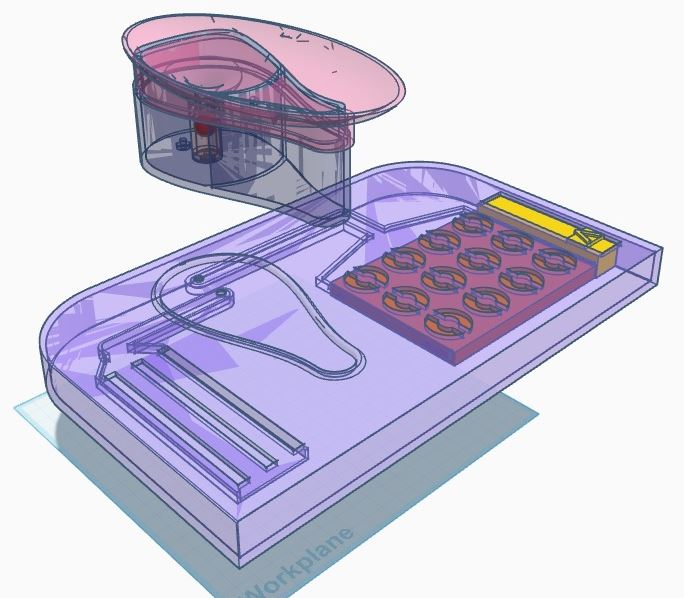
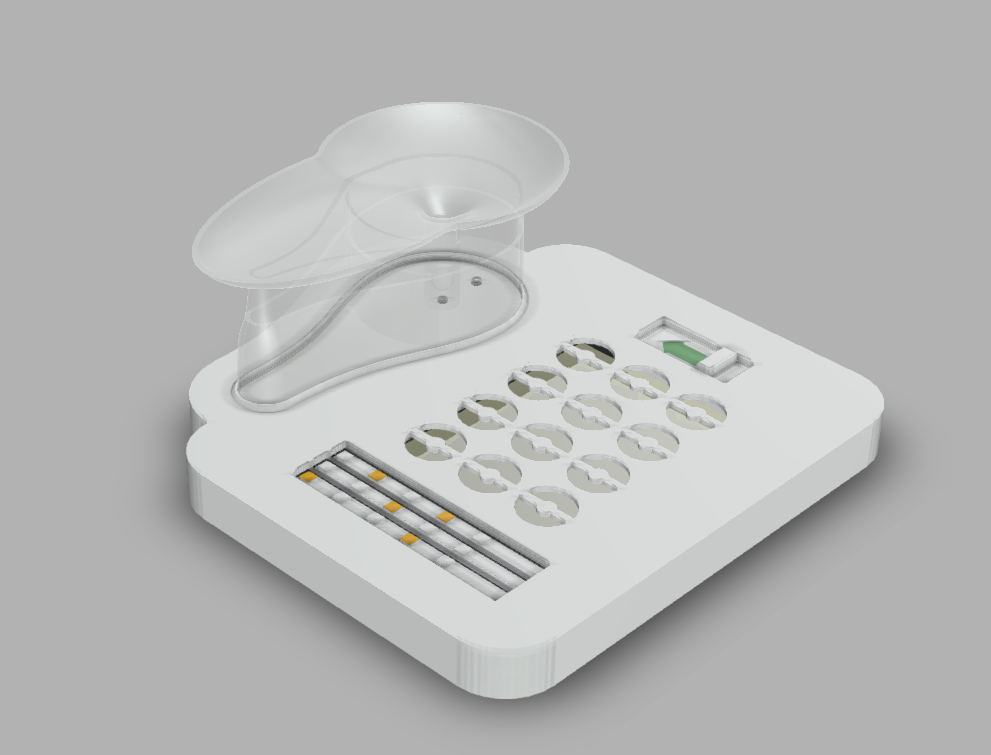
Prototype hardware shown for illustration. The final design will be optimized for clinical workflows and manufacturability.

A C U P
(Automated Complete Urological Panel) is a compact, point-of-care system designed to transform urine into structured, clinically-useful data without the expense and hastle of a dedicated lab.
Point-of-Care urinalysis that thinks like a lab, lives at the bedside.
One void, two specimen streams: initial-void for rapid strip testing and a clean-catch for culture and AST—captured automatically in a single cup.
Covered by U.S. Patent No. 11,950,769. Additional intellectual property pending (U.S. Provisional 63/767,903).
ACUP platform
Designed as a self-contained, automated urine analysis platform:
- Point-of-care: near-patient or clinic-side deployment
- Automated panel: multiple markers from a single sample
- Structured output: ready for EHR integration or research use
Conceptual dual-stream specimen cup: initial void and clean-catch captured from a single urination. Not final device design.
Concept rendering for illustration only. Final device design and panel contents may evolve through research and regulatory review.
What is ACUP?
ACUP (Automated Complete Urological Panel) is envisioned as a point-of-care urinalysis platform that aggregates multiple urinary biomarkers into a single, automated workflow. The goal is simple: make rich urological insight available where care actually happens.
Rather than treating urine as a single-use lab sample, ACUP treats it as a structured signal — something that can be measured, tracked, and integrated into longitudinal care.
How it works (conceptual flow)
- Single-void capture – The patient urinates once into the ACUP specimen cup.
- Smart split inside the cup – A patented flow control system automatically separates the initial void from the clean-catch portion without asking the patient to change their behavior.
- Dual-path analysis – The initial void is routed to a strip-based panel designed for tests such as pregnancy and STI screening, while the clean-catch portion is reserved for culture-focused urological testing.
- Automated AST – The clean-catch fraction is used for automated antibiotic susceptibility testing (AST), where cultured bacteria are exposed to a panel of antibiotics to help identify which options are likely to be effective.
- Structured, clinician-facing output – Results from both streams are combined into a concise, structured report designed for integration into existing clinical workflows.
Conceptual workflow only. Final device design, panel contents, and clinical indications may evolve through engineering, validation, and regulatory review.
Design priorities
- Fast, repeatable workflows for busy clinical environments
- High signal-to-noise data suitable for research and longitudinal tracking
- Clear, conservative presentation of findings to support safe decision-making
Who ACUP is built for
- Clinics & urgent care – Rapid screening support at the point of care, with structured output for follow-up.
- Hospitals – Potential integration into existing workflows where urine data is already central to triage and monitoring.
- Research teams – Consistent, repeatable panels for urology and renal research.
Collaboration & pilots
ACUP is actively evolving. If you are a clinician, researcher, or healthcare innovator interested in early collaboration, pilots, or design review, we’d be happy to talk.
Regulatory & development status
ACUP is currently in the innovation and development phase. The concepts described on this site represent design intent and are subject to change as engineering, validation, and regulatory pathways progress.
Important: ACUP is not currently cleared, approved, or authorized for diagnostic use by any regulatory body. The system should not be used to make or guide clinical decisions.
Contact
To request more information, explore collaboration, or discuss pilot opportunities, please reach out via email:
(Email inquiries only; no phone calls, please.)